

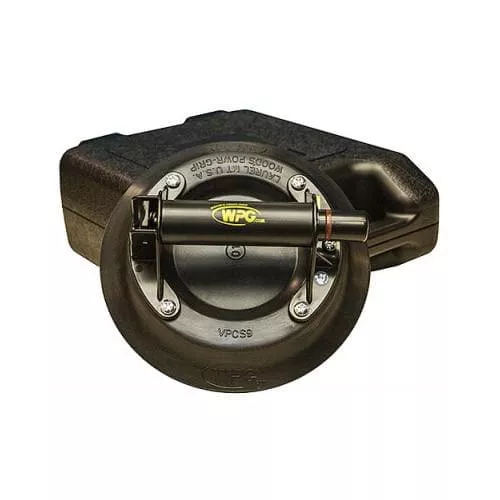
9″ Industrial-Grade Plastic Hand Cup for Flat or Curved Surfaces
Original price was: $71.40.$52.13Current price is: $52.13.
11 in stock
Description
Wood’s Powr-Grip N5000CS — 9″ Industrial-Grade Plastic Handle Concave Vacuum Hand Cup for Flat and Curved Surfaces (150 lbs / 68 kg)
The Wood’s Powr-Grip N5000CS is a heavy-duty vacuum hand cup engineered for fast, reliable attachment to flat and curved smooth, nonporous surfaces with a rated load capacity of 150 lbs (68 kg). Featuring a 9″ (23 cm) concave VPCS9 suction pad with a flexible vacuum pad edge, an all industrial-grade plastic handle and plunger, and a minimum material thickness rating of 1/8″ (3.18 mm), the N5000CS delivers the curved-surface capability of the concave pad design in a lightweight, rust-resistant plastic construction suited for environments where corrosion resistance and reduced tool weight are operational priorities. The N5000CS (SKU: 91540, Model: N5000CS) features a field-replaceable handle, release valve, and plunger for extended serviceability, and ships with a protective carrying case. Manufactured by Wood’s Powr-Grip. Not for use on thin, fragile materials.
The N5000CS is the all-plastic counterpart to the metal-handle N5450CS — both use the same VPCS9 concave pad and share the same 150 lb capacity and 1/8″ minimum material thickness rating, but the N5000CS uses industrial-grade plastic for both handle and plunger (lightweight, rust-resistant) while the N5450CS uses an all-metal handle and plunger (maximum rigidity and durability). The N5000CS also adds field-replaceable handle, release valve, and plunger components — a serviceability feature not present on the N5450CS — making it a strong choice for high-use operations that prioritize tool longevity and reduced replacement cost. Note that no specific minimum radius is published for the N5000CS curved surface rating; always test on the specific curved surface before committing to a production lift.
Key Features & Benefits
Concave 9″ VPCS9 Pad with Flexible Edge — Fast Attachment on Curved Surfaces
The VPCS9 concave pad features a flexible vacuum pad edge that conforms to the surface profile of curved materials, enabling fast vacuum seal formation on curved surfaces without the extended pumping effort required when a flat pad must flex against a curve. The concave geometry pre-positions the pad to match the curvature of the work surface, reducing attachment time and improving seal consistency across repeated lifts on both flat and curved applications. This is the same pad used on the metal-handle N5450CS, making pad replacement interchangeable between the two models.
Industrial-Grade Plastic Handle and Plunger — Lightweight and Rust-Resistant
The all industrial-grade plastic handle and plunger construction makes the N5000CS significantly lighter than metal-handle equivalents, reducing operator fatigue during high-repetition lifting tasks and making it easier to carry and maneuver on job sites. Industrial-grade plastic resists rust and corrosion in wet, humid, and coastal environments where metal handles would require additional maintenance or would degrade over time. For operations where tool weight and corrosion resistance are priorities — such as wet stone shops, coastal glazing job sites, or cold chain environments — the N5000CS is the correct choice over the metal-handle N5450CS.
Field-Replaceable Handle, Release Valve, and Plunger
The N5000CS features a field-replaceable handle, release valve, and plunger — a serviceability design that allows worn or damaged components to be replaced individually without discarding the entire cup body. This is a meaningful cost-of-ownership advantage in high-use environments where mechanical components experience wear over time, and it distinguishes the N5000CS from the N5450CS where the handle assembly is not designed for field replacement. Replacement components are available through Wood’s Powr-Grip authorized distributors.
150 lb (68 kg) Rated Load Capacity
The N5000CS is rated for loads up to 150 lbs (68 kg) on flat and curved smooth, nonporous surfaces, matching the N5450CS and covering the majority of heavy glass panels, stone slabs, and large architectural panels encountered in fabrication and installation work. The 150 lb capacity enables single-operator handling of panels that would otherwise require a two-person lift. Always confirm the actual panel weight before selecting this tool for a lift.
1/8″ (3.18 mm) Minimum Material Thickness
The N5000CS is rated for materials as thin as 1/8″ (3.18 mm), extending its applicability to thinner glass panels, thin stone veneers, and lightweight architectural panels. Despite this thinner material rating, the product is explicitly not for use with thin, fragile materials that could fracture under vacuum stress — always confirm material strength and structural integrity before use, regardless of thickness.
Red-Line Vacuum Loss Indicator — Protective Carrying Case Included
The built-in red-line indicator provides a continuous visual warning if vacuum pressure drops significantly during a lift, giving the operator an immediate alert before load failure can occur. The N5000CS ships with a protective carrying case that keeps the concave VPCS9 pad clean and protected — proper pad storage is especially important for the flexible edge, which must remain free of deformation and contamination to seal correctly on curved surfaces.
Common Applications
Curved Architectural Glass Handling
Glaziers handling curved architectural glass panels use the N5000CS where the concave flexible-edge pad provides faster attachment than a standard flat pad on curved surfaces. The lightweight plastic construction reduces fatigue during extended glazing shifts, and the rust-resistant handle performs reliably in wet or outdoor environments.
Heavy Flat Glass Panel Handling
On flat surfaces, the N5000CS functions as a high-capacity flat-surface cup equivalent to the N5000, handling heavy plate glass, tempered glass, and architectural glass panels up to 150 lbs. The concave pad also seals effectively on flat surfaces, making the N5000CS a versatile single tool for operations that handle both flat and curved glass.
Wet and Coastal Environment Glass and Stone Handling
In environments where moisture, humidity, or salt air would accelerate corrosion on metal-handle cups, the N5000CS’s all-plastic construction provides a maintenance-free alternative. This makes it the preferred choice for glaziers and stone installers working in coastal, marine, or consistently wet environments where the N5450CS’s metal handle would require additional care.
High-Use Operations Requiring Field-Serviceable Tools
Fabrication shops, glazing contractors, and stone installation crews that use hand cups intensively benefit from the N5000CS’s field-replaceable handle, release valve, and plunger. Worn components can be swapped in the field rather than replacing the entire cup, reducing tool downtime and total cost of ownership in high-cycle environments.
Thin Panel and Veneer Handling
The 1/8″ minimum material thickness rating makes the N5000CS suitable for thinner glass panels, stone veneers, and lightweight architectural panels that fall below the minimum thickness ratings of some other WPG cups. Always confirm the material is not inherently fragile in a way that could cause fracture under vacuum stress, regardless of thickness.
Stone Slab and Countertop Handling
Stone fabricators and countertop installers use the N5000CS to lift and position polished granite, marble, and engineered stone slabs. The rust-resistant plastic construction performs reliably in wet stone shop environments where water and slurry are present, and the 150 lb capacity covers most standard countertop sections without requiring a second operator.
Compatible Materials
- Curved architectural glass (consult WPG for specific radius guidance — no published minimum radius for this model)
- Flat plate glass and float glass
- Tempered and laminated safety glass — smooth face
- Polished granite, marble, and engineered stone (flat and curved)
- Smooth painted or coated metal panels (flat and curved)
- Thin glass panels and stone veneers — min. 1/8″ (3.18 mm) thickness, non-fragile
- Glazed ceramic and polished porcelain tile (flat)
- Any smooth, nonporous flat or curved surface within the rated load and thickness limits
Not compatible with: thin, fragile materials that could fracture under vacuum stress; rough, textured, or porous surfaces; surfaces contaminated with oil, wax, or debris in the pad contact area; concrete, brick, unpolished stone, wood, or drywall.
Product Documents
- N5000CS Instructions (PDF)
Application Instructions
Step 1: Surface and Material Assessment
- Confirm the surface is smooth and nonporous — do not proceed on rough, textured, or porous surfaces.
- For curved surfaces, test the pad seal on the specific surface before committing to a production lift — no specific minimum radius is published for this model; consult WPG documentation or contact your distributor for guidance on specific curved surface applications.
- Confirm material thickness is at least 1/8″ (3.18 mm) and that the material is not thin or fragile in a way that could cause fracture under vacuum stress.
- Verify the panel weight does not exceed 150 lbs (68 kg).
Step 2: Pad Inspection and Preparation
- Inspect the VPCS9 concave pad for cuts, tears, deformation of the flexible edge, hardening, or contamination. Replace if damaged — a deformed or damaged flexible edge will prevent proper curved surface sealing.
- Clean the pad contact area on the work surface — remove dust, oil, moisture, and debris.
- Ensure the pad is at operating temperature (above 10°F / -12°C) before use.
Step 3: Attaching the Cup
- Position the concave pad against the surface — on curved surfaces, the flexible edge will conform to the surface profile; ensure full perimeter contact around the pad edge.
- Engage the vacuum mechanism using the plastic handle/plunger until firm resistance is felt.
- Check the red-line vacuum indicator — confirm it shows a stable, full vacuum before lifting.
- Apply a controlled test load (firm downward pull) to verify seal integrity before committing to the full lift.
Step 4: Lifting, Positioning, and Release
- Lift smoothly — avoid sudden jerking motions that can break the vacuum seal.
- Monitor the red-line indicator continuously throughout the lift and during positioning.
- Do not exceed the 150 lb (68 kg) rated load capacity.
- Lower the load fully to a stable surface before releasing the vacuum.
- Engage the release mechanism slowly and in a controlled manner.
- Clean the pad after use and store in the supplied protective carrying case — protect the flexible pad edge from deformation during storage.
Technical Specifications
| Specification | Details |
|---|---|
| Model | N5000CS |
| SKU | 91540 |
| Vendor | Wood’s Powr-Grip |
| Load Capacity | 150 lbs [68 kg] |
| Pad Diameter | 9″ [23 cm] — Concave |
| Pad Model | VPCS9 |
| Rubber Type | Standard |
| Handle Type | Industrial-Grade Plastic (field-replaceable) |
| Plunger Type | Industrial-Grade Plastic (field-replaceable) |
| Release Valve | Field-replaceable |
| Surface Texture Required | Smooth |
| Material Porosity Required | Nonporous |
| Allowable Surface Curvature | Flat to Curved |
| Minimum Radius for Curved Loads | Not published — test on specific surface before use |
| Minimum Material Thickness | 1/8″ [3.18 mm] |
| Maximum Elevation | 5,000 ft [1,500 m] |
| Operating Temperature Range | 10°F to 120°F [-12°C to 49°C] |
| Vacuum Loss Indicator | Yes (red-line) |
| Includes | Protective carrying case |
Safety Data Summary
Hazard Information
- Not for use with thin, fragile materials — vacuum stress can cause fracture even at the 1/8″ minimum thickness if the material is inherently fragile
- No specific minimum radius is published for curved surface use — always test on the specific curved surface before committing to a production lift
- Vacuum loss during a lift can result in sudden load drop, causing serious injury or property damage
- Overloading beyond 150 lbs (68 kg) rated capacity may cause sudden cup release without warning
- Deformation or damage to the VPCS9 flexible pad edge will prevent proper curved surface sealing — inspect before every use
- Damaged or contaminated pads must be replaced before use
- Operating below 10°F (-12°C) may degrade rubber pad performance and vacuum retention
- Do not use above 5,000 ft (1,500 m) elevation
Personal Protective Equipment
- Safety glasses or face shield when handling glass panels
- Cut-resistant gloves rated for glass and stone handling
- Steel-toed safety footwear
- Hard hat when working in overhead or multi-level environments
Safe Handling
- Inspect the VPCS9 flexible pad edge before every use — deformation or damage prevents proper curved surface sealing
- Test on the specific curved surface before committing to a production lift — no minimum radius is published for this model
- Confirm material is not thin or fragile before use, even if thickness exceeds the 1/8″ minimum
- Never exceed the rated 150 lb load capacity
- Monitor the red-line indicator continuously — lower the load immediately if vacuum loss is detected
- Replace worn handle, release valve, or plunger components promptly — field-replaceable design makes this practical without discarding the cup body
- Store in the supplied carrying case with the flexible pad edge protected from deformation
Frequently Asked Questions
Q: What is the difference between the N5000CS and the N5450CS?
A: Both use the same VPCS9 concave pad and share the same 150 lb capacity and 1/8″ minimum material thickness rating. The N5000CS has an all industrial-grade plastic handle and plunger (lightweight, rust-resistant, field-replaceable) while the N5450CS has an all-metal handle and plunger (maximum rigidity and durability) and a published 21½” minimum radius for curved surfaces. The N5000CS does not publish a specific minimum radius — test on the specific curved surface before use. Choose the N5000CS for lightweight construction, corrosion resistance, and field serviceability; choose the N5450CS for maximum handle durability and a defined curved surface radius specification.
Q: What is the difference between the N5000CS and the N5000?
A: Both use industrial-grade plastic handle and plunger construction, but the N5000CS uses the VPCS9 concave pad (curved and flat surface capable) while the N5000 uses the standard G0725 flat pad (flat surfaces only). The N5000CS also has a 1/8″ minimum material thickness rating and field-replaceable components. Choose the N5000CS when curved surface capability or thinner material handling is required; choose the N5000 for flat-surface-only applications where a standard flat pad is sufficient.
Q: What components can be replaced in the field?
A: The handle, release valve, and plunger are all field-replaceable on the N5000CS. Replacement components are available through Wood’s Powr-Grip authorized distributors. This serviceability feature extends the tool’s service life and reduces total cost of ownership in high-use environments.
Q: Is there a published minimum radius for curved surface use?
A: No specific minimum radius is published for the N5000CS. Always test the pad seal on the specific curved surface before committing to a production lift. For a model with a published minimum radius specification, the N5450CS (21½” / 545 mm) or N6450 (13″ / 330 mm) provide defined curved surface ratings.
Q: What replacement pad does the N5000CS use?
A: The N5000CS uses the VPCS9 concave standard rubber pad (9″ diameter) — the same pad used on the N5450CS, making replacement pads interchangeable between the two models. Do not substitute a flat G0725 pad on the N5000CS for curved surface applications. Replacement pads are available through Wood’s Powr-Grip authorized distributors.
Q: Is this product made to order?
A: Yes. This product is made to order and all sales are final. Please confirm your surface type, material thickness, and load requirements before placing your order.
California Residents: ⚠️ WARNING: Cancer and/or Reproductive Harm — www.p65Warnings.ca.gov
Related products
-
- Sale!
- Hardware
Segmented & Side Protected Drill Bit
- Original price was: $32.00.$17.19Current price is: $17.19.
- Add to cart
-
- Sale!
- Hardware
Abaco Qli Universal Slab Rack Rubber Cap
- Original price was: $1,058.57.$629.99Current price is: $629.99.
- Add to cart
-
- Sale!
- Hardware
Wooden Mixing Sticks
- Original price was: $12.80.$8.82Current price is: $8.82.
- Add to cart
-
- Sale!
- Hardware
Metal Floor Disc – 3″ – 8 Segment
- Original price was: $77.87.$50.69Current price is: $50.69.
- Add to cart
-
- Sale!
- Hardware
Diamond Non-Core Drill Bit (Pack of 4)
- Original price was: $123.46.$89.89Current price is: $89.89.
- Add to cart
-
- Sale!
- Hardware
Abaco Qli Universal Slab Rack-SET
- Original price was: $1,143.52.$663.74Current price is: $663.74.
- Add to cart
-
- Sale!
- Hardware
Diamond Chain – Competitor Equipment Gas & Electric
- Original price was: $783.27.$422.34Current price is: $422.34.
- Add to cart
-
- Sale!
- Hardware
StoneTech Enhancer Pro Sealer
- Original price was: $177.63.$115.00Current price is: $115.00.
- Add to cart